Last updated: April 3, 2026
There’s a dangerous assumption creeping into Christian leadership circles today—the idea that healthy churches just happen, that vibrant communities of faith will somehow materialize without intentional effort. But the future of the church won’t drop from the sky. It must be built, prayerfully and persistently, through the ancient practice of disciple making. For those seeking discipleship podcasts that cut through the noise and address the hard questions of Christian leadership, the reality is clear: church planting isn’t a program to be implemented but the natural, inevitable fruit of faithful discipleship.

The Crisis of Passive Christianity
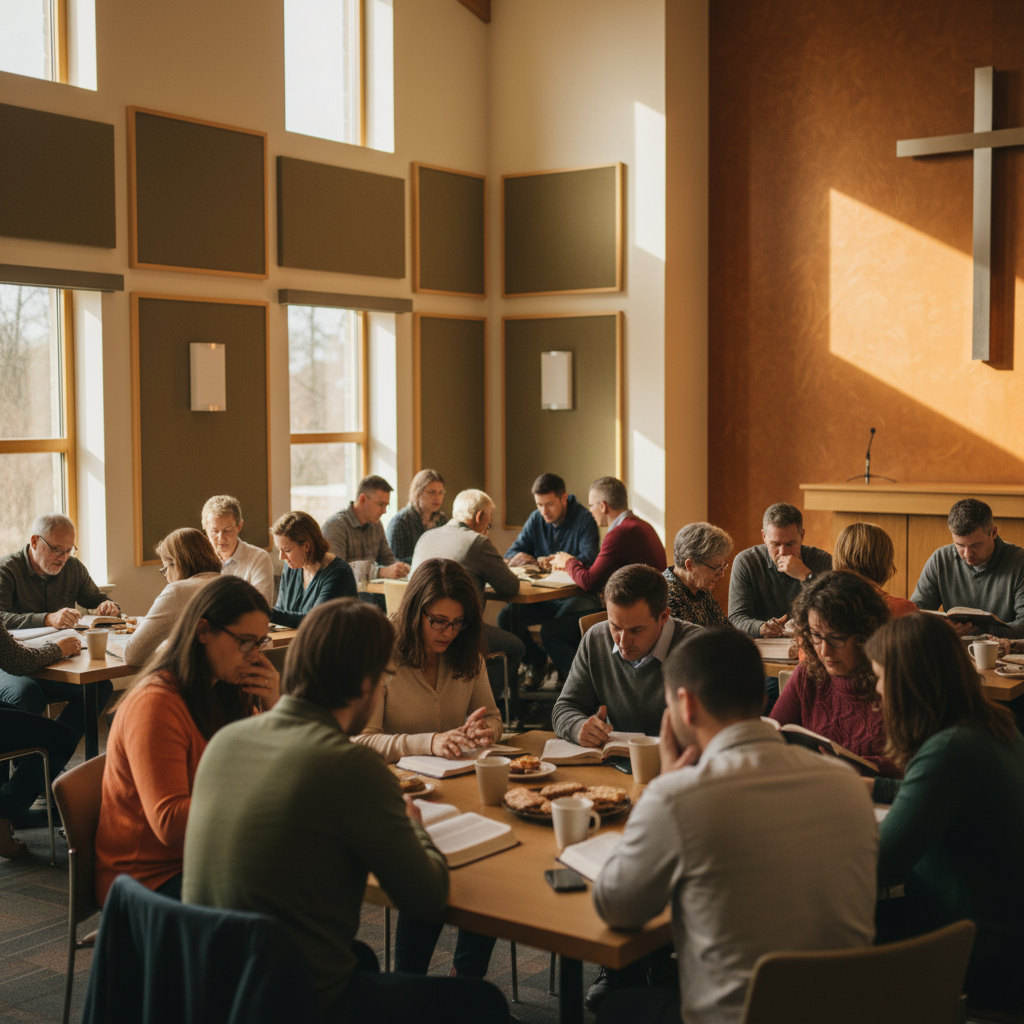
Walk into most churches on any given Sunday and you’ll find well-meaning believers who have never been challenged to make disciples. They’ve been discipled to—fed, entertained, and comforted—but rarely discipled for multiplication. This consumer approach to faith has created what many Reformed theology podcasts identify as a generational crisis: churches full of recipients and empty of reproducers.
The statistics are sobering. According to research from the Barna Group, nearly half of churchgoing Christians (47%) say they have never been personally discipled by another believer. Even more troubling, only 17% of practicing Christians report that they are currently discipling someone else. The pipeline isn’t just leaking—it’s broken.
John Calvin, in his Institutes of the Christian Religion, warned against this very passivity: “We are not our own: let not our reason nor our will, therefore, sway our plans and deeds. We are not our own: let us therefore not set it as our goal to seek what is expedient for us according to the flesh.” The church was never meant to be a repository of consumers but a community of co-laborers, each equipped for the work of ministry.
2 Timothy 2:2 and the Multiplication Mandate

At the heart of biblical discipleship stands one verse that has launched movements throughout church history: “And the things you have heard me say in the presence of many witnesses entrust to faithful men, who will be able to teach others also” (2 Timothy 2:2). This isn’t complicated theology. Paul instructs Timothy to take what he’s learned and pass it to faithful people who will then pass it to others. Four generations in one verse.
Jonathan Edwards, the great American theologian and revivalist, understood this multiplication principle intimately. His ministry in Northampton wasn’t marked by spectacular events but by the steady, faithful investment in younger ministers. Edwards wrote extensively about the necessity of “visible saints”—believers whose lives demonstrated the reality of their conversion and who could therefore serve as credible witnesses and mentors to others.
Charles Spurgeon, the Prince of Preachers, put it even more directly: “Every Christian is either a missionary or an impostor.” For Spurgeon, the idea that one could be a genuine believer without being a disciple maker was nonsensical. The Christian life, by its very nature, is outward-facing and multiplication-oriented.
Church Planting: The Logical Conclusion of Discipleship
Here’s what many discipleship podcasts miss: church planting isn’t a specialized ministry for the super-gifted. It’s the natural, organic result of disciples making disciples. When believers take seriously the call to invest in others—when they practice the kind of intentional, relational disciple making modeled by Jesus Himself—new communities of faith inevitably form.
Timothy Keller, in his seminal work on church planting, noted that “the vigorous, continual planting of new congregations is the single most crucial strategy for 1) the numerical growth of the Body of Christ in any city, and 2) the continual corporate renewal and revival of the existing churches in a city.” Keller understood what the New Testament makes plain: church multiplication is discipleship taken to its logical conclusion.
Kevin DeYoung, in his characteristic clarity, writes: “The Great Commission is not about making converts. It’s about making disciples. And disciples make disciples. That’s how the church grows—not through attractional events but through relational multiplication.” This distinction matters profoundly for how we approach Christian leadership and church health.
Learning from Church History
The early church knew nothing of the consumer Christianity that plagues modern American evangelicalism. In the first three centuries, Christianity spread not through marketing campaigns or celebrity pastors but through ordinary believers sharing their faith in homes, marketplaces, and along trade routes. By AD 300, despite intense persecution, Christians numbered approximately 6 million—roughly 10% of the Roman Empire’s population.
How did this happen? Historian Rodney Stark, in The Rise of Christianity, documents that the faith spread primarily through social networks—families, friends, and coworkers sharing the gospel and discipling new believers. The early church didn’t have professional clergy doing all the ministry. They had the priesthood of all believers in practice, not just in theory.
The Reformation recovered this vision. Martin Luther’s doctrine of the priesthood of all believers wasn’t merely theological abstraction—it was a call to arms for every Christian to take responsibility for the spread of the gospel. When Luther translated the Bible into German, he wasn’t just making Scripture accessible; he was equipping ordinary believers for the work of ministry that had been monopolized by the clergy.

The Disciple Standard Podcast: A Word for Our Time
In a recent episode of The Disciple Standard Podcast titled “Why the Future of the Church Won’t Drop from the Sky”, hosts Aaron Mamuyac and Scott Vander Ploeg tackle this very issue with the urgency it deserves. This 75-minute conversation cuts through the platitudes that often characterize discussions about church health and gets to the heart of what it means to build multiplying communities of faith.
The episode explores why so many churches plateau or decline despite their best programmatic efforts. The diagnosis is uncomfortable but necessary: we’ve built churches designed to attract consumers rather than equip missionaries. We’ve prioritized attendance over transformation, and the results speak for themselves.
What makes this episode particularly valuable for those interested in church multiplication is its practical focus. This isn’t abstract theology—it’s a call to action backed by real-world experience in church planting and discipleship. The hosts share from their own journeys, including the challenges and victories of launching new faith communities from the ground up.
For anyone serious about Christian leadership in the 21st century, this episode is essential listening. It connects the dots between personal discipleship and church multiplication in ways that are both theologically rigorous and immediately applicable.
The Multiply Method: A Framework for Faithful Discipleship
At The Disciple Standard, we frame discipleship through what we call the Multiply Method: Know Jesus → Make Jesus Known → Live a Jesus Life. This isn’t a complicated formula—it’s the pattern we see throughout the New Testament and the history of the church.
Know Jesus: Genuine discipleship begins with knowing Christ personally, not just knowing about Him. This requires immersion in Scripture, consistent prayer, and the accountability of Christian community. As Jesus said, “This is eternal life: that they know you, the only true God, and Jesus Christ, whom you have sent” (John 17:3).
Make Jesus Known: The natural overflow of knowing Jesus is making Him known. This happens in our homes, workplaces, neighborhoods, and beyond. It happens through intentional relationships where we invest in others as Paul invested in Timothy, as Jesus invested in the Twelve.
Live a Jesus Life: Discipleship isn’t merely intellectual assent or evangelistic activity—it’s the transformation of our entire lives to reflect the character and priorities of Christ. This is the life that makes the gospel credible to a watching world.
When these three elements are present in a believer’s life, church planting becomes inevitable. Multiplied disciples result in multiplied churches. It’s not magic—it’s math. Four generations of faithful multiplication, as outlined in 2 Timothy 2:2, can result in exponential growth that no marketing strategy could ever replicate.
FAQ: Church Planting and Discipleship
What is the connection between discipleship and church planting?
Church planting is the natural fruit of faithful discipleship. When believers take seriously the call to make disciples who make disciples, new communities of faith inevitably form. Church planting isn’t a separate program—it’s discipleship multiplied.
Do I need to be a pastor to plant a church?
No. While pastoral gifting is valuable, the New Testament model of church planting involved ordinary believers sharing their faith and gathering new communities. The priesthood of all believers means every Christian has a role in the multiplication of the church.
How long does it take to disciple someone?
Discipleship is a lifelong journey, but the initial investment of intentional, relational training typically takes 12-24 months of consistent meeting, study, and practical ministry together. The goal isn’t graduation but multiplication—discipling someone who will then disciple others.
What are the best discipleship podcasts for church leaders?
The Disciple Standard Podcast offers Reformed theology and practical insights on church planting and multiplication. Episodes like “Why the Future of the Church Won’t Drop from the Sky” provide both theological depth and practical application for Christian leaders.
Is church planting still effective today?
Absolutely. Research consistently shows that new churches are more effective at reaching unchurched people than established churches. According to the North American Mission Board, new churches baptize an average of 11 times more people per attendee than churches over 15 years old.
A Call to Action
The future of the church won’t drop from the sky. It will be built by faithful men and women who take seriously the call to make disciples. It will be built by churches that prioritize multiplication over maintenance, sending over accumulating, and mission over comfort.
If you’re a pastor, the question isn’t whether your church can afford to prioritize discipleship—it’s whether you can afford not to. If you’re a lay leader, the question isn’t whether you’re qualified to disciple others—it’s whether you’re willing to be faithful with what you’ve been given. If you’re a new believer, the question isn’t whether you need more training before you invest in others—it’s whether you’re ready to obey the simple command to share what you’ve received.
The church doesn’t need more programs. It doesn’t need better marketing. It needs disciples who make disciples, churches that plant churches, and leaders who are willing to invest their lives in the slow, unglamorous work of multiplication.
Will you answer the call?
About the Author: Aaron Mamuyac serves as Campus Pastor at Sunlight Community Church. He is the co-host of The Disciple Standard Podcast, where he explores the intersection of Reformed theology and practical discipleship. Aaron is passionate about church multiplication and equipping ordinary believers for the extraordinary work of making disciples who make disciples.