

Here’s a statistic that should stop every pastor and church leader in their tracks: Of the only 20% of churches that are growing today, 95% of that “growth” is not actual growth at all—it’s shuffling Christians around into new groups. Only 1% of what we call “church growth” represents reaching lost people.
Let that sink in. One percent.
J.D. Greear, pastor of The Summit Church and former president of the Southern Baptist Convention, has been sounding this alarm for years. “The greatness of the church,” he insists, “lies not in its seating capacity, but in its sending capacity.” And he’s absolutely right. We’ve become experts at rearranging the furniture while the house burns down around us.
The Shuffling Problem
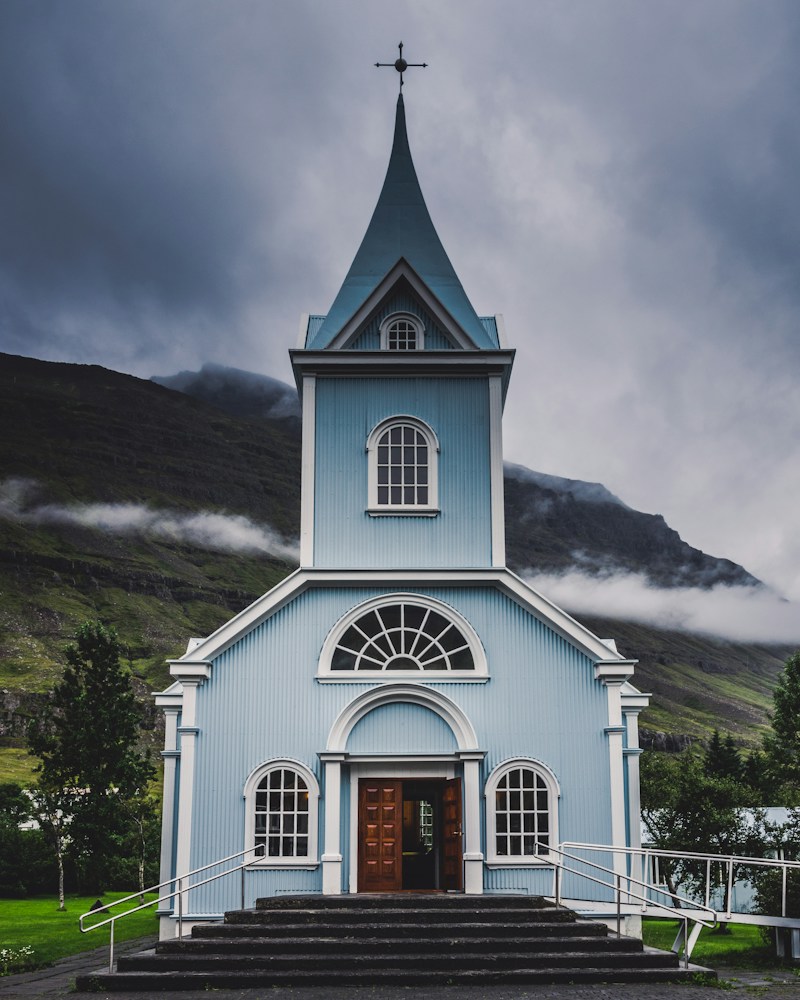
I’ve seen it happen in cities I’ve worked in. A new church plant opens with slick marketing and a charismatic preacher. Within months, they’ve got 200 people—mostly transfer growth from existing churches down the street. The pastor celebrates. The denomination highlights it as a “success story.” But the kingdom of God hasn’t grown by a single soul. We’ve just moved sheep from one pen to another.
John Calvin, writing in his Institutes, understood this danger well. He warned against measuring the church’s health by external markers—buildings, budgets, and bodies—rather than by faithfulness to Christ’s commission. “The church,” he wrote, “is the society of all the saints, a society which, spread over the whole world, and existing in all ages, yet bound together by the one Spirit and the same doctrine.” The true church isn’t a building we fill. It’s a people we send.
Consider the early church in Acts. Luke records 39 out of 40 miracles happening outside the church building—where the Spirit preferred to work. The apostles weren’t strategizing about worship flow and seating arrangements. They were getting beaten, imprisoned, and scattered because they couldn’t stop talking about Jesus. And everywhere they went, the gospel advanced. Not by addition. By multiplication.
The Seed Must Die

Jesus put it starkly: “Unless a grain of wheat falls into the earth and dies, it remains alone; but if it dies, it bears much fruit” (John 12:24). This is the paradox at the heart of all true church growth: Life only comes through death in the church.
Jonathan Edwards, in his famous sermon “The Most High a Prayer-Hearing God,” captured this multiplication principle: “When God is about to do some great work, He first sets His people a-praying.” But here’s what Edwards understood that we often miss—God doesn’t multiply through hoarding. He multiplies through scattering. The seed that clings to its life loses it. The church that clings to its members loses them. But the church that dies to itself—sending, releasing, planting—finds life abundant.
Paul’s charge to Timothy makes this explicit: “And the things you have heard me say in the presence of many witnesses entrust to faithful men who will be able to teach others also” (2 Timothy 2:2). Four generations in one verse: Paul → Timothy → faithful men → others also. This isn’t a chain of command. It’s a chain of multiplication. And it only works if every link is willing to let go.
The Cost of Sending
Let’s be honest about what this costs. Sending capacity requires that we:
- Release our best people. Not the ones we’re done with. Our best. Our worship leaders, our children’s ministry directors, our faithful elders. We send them to the next church plant knowing our own ministry will feel the loss.
- Invest in leaders we won’t keep. The leadership pipeline isn’t about building our empire. It’s about preparing others for theirs. Mac Lake of NAMB’s Send Network puts it bluntly: “We need to raise up and send out instead of gather and count.”
- Die to our preferences. The church that sends doesn’t get to control everything. New churches will do things differently. They’ll reach people we couldn’t. They’ll make decisions we wouldn’t. And that’s the point.
Charles Spurgeon, the prince of preachers, planted dozens of churches from his Metropolitan Tabernacle in London. When asked about the cost, he reportedly said, “I would rather save one sinner than be the greatest orator on earth.” Every church plant meant losing some of his best people. Every sending meant personal sacrifice. But he understood what we too often forget: The goal isn’t a full auditorium. It’s a multiplying movement.
Measuring What Matters

So how do we shift from seating capacity to sending capacity? It starts with honest metrics:
- How many of our baptisms are conversions vs. transfers? If most of our baptisms are people who were already Christians elsewhere, we’re not reaching the lost. We’re recycling the saved.
- How many leaders have we developed and released? Not just volunteers who serve in our ministry—leaders we’ve prepared for ministry elsewhere. Count the ones who left, not just the ones who stayed.
- How many churches have we planted or partnered to plant? Every healthy church should be a church-planting church. If your church has never sent out a church plant, you’re not multiplying. You’re maintaining.
- What’s our ratio of goers to stayers? Tim Keller has noted that healthy churches typically see 10-20% of their members involved in some form of mission beyond the local church. If everyone’s focused inward, something’s broken.
The statistics on American Christianity are sobering. The Pew Research Center found that while 65% of Americans identify as Christian, only 45% pray daily and just 25% attend services weekly. More alarming, only 6% of Americans hold a biblical worldview—even among those who identify as “born-again.” We’re not just failing to reach the lost. We’re failing to disciple the found.
A Call to Die
Here’s the hard truth: We can’t have it both ways. We cannot build our kingdom and God’s. We cannot fill our seats and fill the earth. We cannot cling to what we have and multiply what He’s given.
But here’s the promise: “Unless a grain of wheat falls into the earth and dies, it remains alone; but if it dies, it bears much fruit.” The seed that dies doesn’t just produce fruit—it produces much fruit. Thirty, sixty, a hundredfold. The church that sends doesn’t shrink. It multiplies. The ministry that releases doesn’t die. It spreads.
Will it be messy? Yes. Will we lose some people we wish would stay? Absolutely. Will there be conflict and misunderstanding and seasons where we wonder if we made a mistake? Without question. But the alternative is worse: a church that grows full while the world dies empty. A ministry that prospers while the kingdom stalls. A people who gather while the nations perish without a witness.
So let me ask you—the pastor, the elder, the ministry leader, the faithful church member reading this: What’s your church’s sending capacity? Not how many can you seat. How many can you send? Not how big can you grow. How far can you reach?
The kingdom of God doesn’t need more seats. It needs more seeds. Seeds willing to fall into the ground and die, trusting that the One who calls us is faithful—and that death, in His economy, is always the doorway to life.