
The most effective church planting movement in the world right now doesn’t use seminary-trained pastors, expensive buildings, or worship bands. It uses three questions and an open Bible.
Over the last thirty years, something remarkable has happened. In places where missionaries were expelled, where Christianity was illegal, where resources were nonexistent — churches have multiplied exponentially. Not through mass evangelism crusades. Not through sophisticated church growth strategies. But through ordinary Christians asking three simple questions around God’s Word.
This is Disciple Making Movement (DMM) methodology, and it’s quietly becoming the most significant development in global church planting since the Reformation. The tool at its center — Discovery Bible Study (DBS) — is so simple that children can lead it, yet so profound that it’s sparking fourth-generation churches in unreached people groups.
What Is Discovery Bible Study?
Discovery Bible Study isn’t complicated. Gather 2-5 people (believers or not), read a short Bible passage aloud, and ask three questions:
- What does this tell me about God and people?
- What will I do to obey this?
- Who else will I tell?
That’s it. No sermon preparation. No theological degree required. Just God’s Word, open hearts, and accountability to obey and share.
The genius of DBS isn’t in the questions — it’s in what the questions assume. They assume that ordinary people can hear from God directly through Scripture. They assume that knowing truth must lead to obeying truth. And they assume that every disciple is called to make disciples, not just receive teaching.

The Theological Roots Run Deep
This methodology isn’t new — it’s ancient. Jesus himself used discovery-based discipleship. When he sent the seventy-two ahead of him, he didn’t give them detailed lesson plans. He sent them to discover through experience, then debriefed them: “What did you see? What happened?” (Luke 10:17-20). The rabbinic model Jesus employed expected disciples to engage Scripture actively, not passively receive it.
John Calvin understood this dynamic when he wrote in his Institutes: “We owe to the Scripture the same reverence which we owe to God, because it has proceeded from him alone, and has nothing of man mixed with it.” The Reformer saw Scripture not as a textbook for theologians but as the living voice of God speaking directly to his people.
Jonathan Edwards, witnessing the First Great Awakening, noted that genuine revival produced not just emotional response but “holy practice.” In his Treatise Concerning Religious Affections, he argued that true faith necessarily issues in transformed living — the very heartbeat of Discovery Bible Study’s obedience component.
The Global Evidence Is Compelling
The numbers tell a striking story. According to Mission Frontiers and the 24:14 Coalition, there are now over 1,400 active DMM efforts globally, resulting in an estimated 77,000 new churches and 1.7 million new disciples in the last decade alone. In one South Asian nation where missionary work is restricted, a single house church has multiplied into 37,000 churches in twenty years — all through Discovery Bible Study methodology.
Compare this to traditional church planting models in the West. A 2023 Barna study found that 42% of American church plants fail within four years, with leadership burnout and funding challenges cited as primary causes. Meanwhile, DMMs operate with zero budget, no paid staff, and no buildings — yet they multiply.
The difference isn’t theological. Both approaches preach the gospel. The difference is methodological: one creates consumers of religious services; the creates obedient disciple-makers.
Why This Matters for Church Planters
Church planters in North America face an increasingly post-Christian context. The goodwill that once existed toward Christianity has evaporated. Launching a traditional church — with its professional pastor, worship team, children’s ministry, and facility costs — requires enormous capital and social capital that many communities simply don’t have.
But Discovery Bible Study offers a different pathway. It recognizes that the church doesn’t need another consumer option. It needs disciple-makers who multiply.
Tim Keller, reflecting on urban church planting, once observed: “The gospel is not just the A-B-Cs but the A-to-Z of Christianity.” DBS embodies this by keeping the gospel central to every gathering. There are no programmatic distractions — just God’s Word, obedient response, and relational multiplication.
For bi-vocational planters (the growing majority in America), DBS is sustainable. It requires no preparation time, no stage performance, no curriculum budget. It can happen in a living room, a coffee shop, or a break room. It fits the rhythms of ordinary life.
The Historical Pattern
Church history reveals that movements multiply through reproducible methods, not professional clergy. The early church exploded not through synagogue sermons but through household gatherings where believers “devoted themselves to the apostles’ teaching and to fellowship, to the breaking of bread and to prayer” (Acts 2:42). Each household church was led by ordinary believers, not seminary graduates.
The Methodist revival that transformed England and America followed a similar pattern. John Wesley’s “class meetings” gathered 12-15 people for mutual accountability, Scripture reading, and confession. These small groups multiplied faster than Wesley could organize them, sparking a movement that reached millions.
The Moravians at Herrnhut, under Count Zinzendorf, committed to “pray without ceasing” and sent 300 missionaries in thirty years — proportionally more than the entire Protestant church had sent in two centuries. Their secret? Every believer was expected to make disciples, not just support professionals.
Making It Work in Your Context
Discovery Bible Study isn’t just for the mission field. It’s increasingly being adapted for Western church planting, small group multiplication, and even existing church revitalization.
Start small. Don’t launch a program. Start with one group of 2-5 people — believers or not. Choose a short Scripture passage (10-15 verses). Read it aloud twice. Ask the three questions. Let the Spirit work.
Focus on obedience, not knowledge. The goal isn’t understanding every theological nuance. The goal is responding to what God reveals. When group members commit to specific obedience, transformation follows.
Expect multiplication. The third question — “Who will you tell?” — isn’t optional. Every participant should bring someone new to the next gathering. This creates natural multiplication chains.
Resist the urge to professionalize. The moment you add a sermon, a worship set, or a children’s ministry, you’ve made the gathering non-reproducible by ordinary believers. Keep it simple.
The Cost of Neglect
There’s a reason most churches plateau. They’ve optimized for attendance, not multiplication. They’ve professionalized what should be reproducible. They’ve made discipleship a program instead of a lifestyle.
Charles Spurgeon, the Prince of Preachers, warned against this tendency: “The Holy Spirit will move them by seeing us move. If we do not work, neither will they.” Spurgeon understood that multiplication requires modeling — leaders who demonstrate disciple-making, not just teach it.
When churches abandon reproducible discipleship for professional dependency, they die slowly. The statistics confirm it: denominations that emphasize clergy education and institutional structures over lay mobilization are declining fastest. Those that empower ordinary members to make disciples are growing — often explosively.
A Call to the Ancient Path
2 Timothy 2:2 remains the church’s multiplication strategy: “And the things you have heard me say in the presence of many witnesses entrust to faithful men who will be able to teach others also.” Four generations in one verse. Paul to Timothy to faithful men to others. That’s a DMM in biblical form.
Discovery Bible Study isn’t a trendy technique. It’s a return to the ancient path — the path that turned the world upside down once before, and can do so again.
The question isn’t whether DBS works. The evidence is overwhelming. The question is whether we have the humility to abandon our professional models and embrace the simplicity of God’s Word multiplied through ordinary people.
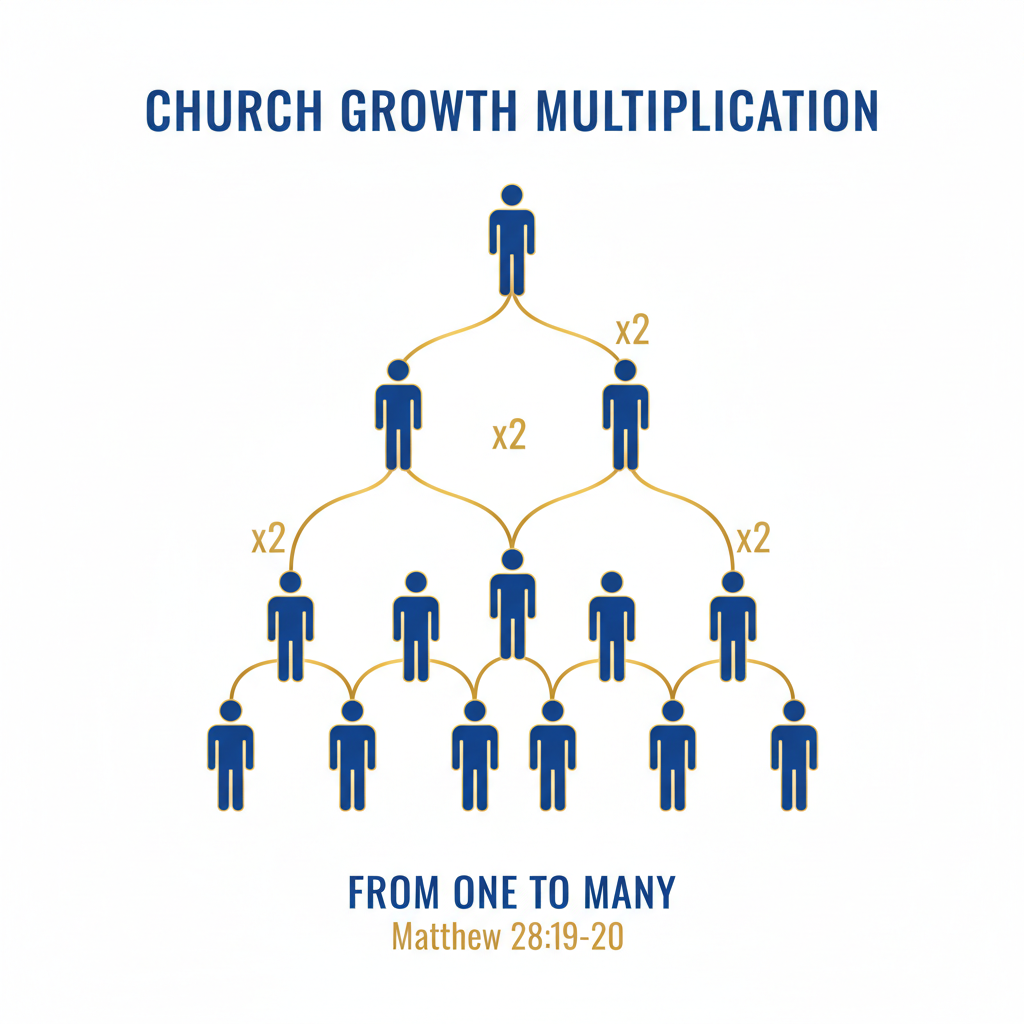
Because if we invite a person to our church, we maybe grow the kingdom by one. If we teach a person to make disciples wherever they are and with whoever they meet, it may never stop growing.
Your Next Step
Start this week. Not next month. Not when you’ve prepared more. This week.
Identify 2-3 people — believers or seekers — and invite them to read Scripture together. Use the three questions. Let God work. Then watch what happens when ordinary people discover that they too can hear God’s voice, obey his Word, and make disciples.
The multiplication movement doesn’t need more professionals. It needs more people willing to sit in living rooms with open Bibles and obedient hearts.
“The gospel is not a theory; it is a power. It is not a philosophy; it is a life. It is not a speculation; it is a working energy.” — Horatius Bonar