“And the things you have heard me say in the presence of many witnesses entrust to faithful men who will be able to teach others also.” — 2 Timothy 2:2
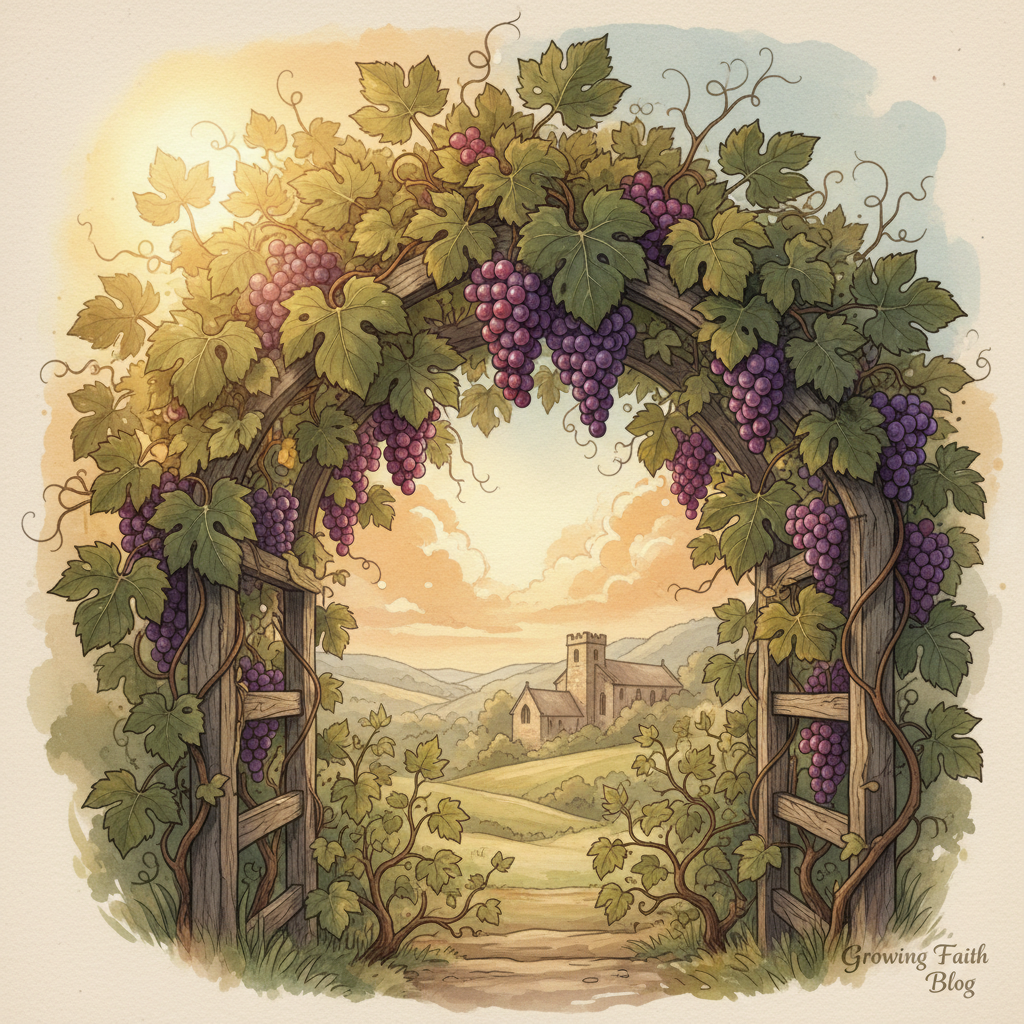
We love to talk about the vine. Disciple-making movements. Spiritual multiplication. The organic spread of the gospel through relationships, house to house, life on life. This is the stuff that gets church planters out of bed in the morning.
But nobody gets excited about the trellis.
As Zach Cochran recently noted in 9Marks, “When a church’s trellis is broken, its ministry vine can’t grow.” Church operations—governance, finances, facilities, systems—isn’t glamorous. It doesn’t preach well. You won’t see it trending on Christian Twitter. But here’s what we’ve forgotten: church operations is rooted in the doctrine of creation, where God brought order from chaos.
This matters for disciple-making. This matters for church planting. And if we ignore it, our multiplication efforts will stall before they start.
The Theology Behind the Spreadsheet
John Calvin, in his Institutes of the Christian Religion, emphasized that God is a God of order. “The whole world is a theatre for the display of the divine goodness, wisdom, justice, and power,” he wrote. The created order reflects God’s character—and when we bring order to chaos in our churches, we image our Creator.
This is why operations isn’t merely administrative. It’s stewardship. It’s the application of godly wisdom to the management of resources God has entrusted to us. When we treat church operations as a necessary evil rather than a theological necessity, we subtly communicate that the “real” ministry happens somewhere else—in the pulpit, in small groups, in the baptistry.
But Paul didn’t make this distinction. In Acts 6, when the Grecian widows were being overlooked, the apostles didn’t dismiss the problem as “just administrative.” They recognized that how the church cared for its most vulnerable members was inseparable from the ministry of the Word. The solution? Appoint leaders of “good reputation, full of the Spirit and of wisdom” to oversee the distribution. Operations required Spirit-filled leaders then. It still does today.
Why Church Planters Can’t Afford to Ignore the Trellis
Here’s a hard truth: The church plants that survive their first five years aren’t necessarily the ones with the most charismatic leaders or the slickest branding. They’re the ones with solid systems.
According to research from the Send Network, approximately 65-70% of church plants survive beyond four years—but that number jumps significantly when the planter has strong operational support and leadership development systems in place. The planters who treat finances, governance, and succession planning as afterthoughts often find themselves burning out, morally failing, or watching their churches plateau because they built on sand.
Mike McKinley, in a recent 9Marks article, reflected on his own church plant: “Eighteen years in, I took a sabbatical and realized something beautiful—the church’s other elders, staff, and deacons were leading effectively.” This didn’t happen by accident. McKinley made leadership development his second priority after preaching the gospel. He built the trellis so the vine could grow.
Church operations is what makes multiplication sustainable. Without clear governance, you can’t develop leaders. Without financial accountability, you can’t send planters. Without documented systems, everything depends on one person’s personality—and when they fall or leave, so does the church.
The Three Systems Every Multiplying Church Needs
If you’re planting a church or leading one with multiplication in mind, you need three operational systems in place:
1. Leadership Pipeline Development
Paul’s command in 2 Timothy 2:2 assumes a process: Paul → Timothy → faithful men → others also. This is four generations of intentional investment. How are you identifying, assessing, and developing leaders? Do you have a clear pathway from “new believer” to “small group leader” to “elder candidate”?
Charles Spurgeon, who trained nearly 900 pastors through his Pastor’s College, understood this. “I am quite sure,” he wrote, “that the best way to preserve the usefulness of a church is to train up young men to carry on the work.” Your church’s multiplication capacity is directly tied to your leadership development pipeline.
2. Financial Stewardship and Generosity Systems
Multiplication requires resources. The early church in Acts 11 sent Barnabas to Antioch with resources from Jerusalem. Paul collected offerings from Gentile churches to support the poor in Judea. Money wasn’t tangential to mission—it was part of it.
Healthy churches have transparent financial systems, generous cultures, and reserves that allow them to take risks on new works. They don’t wait until they’re “big enough” to plant; they build generosity and stewardship into their DNA from day one.
3. Governance and Succession Clarity
Who makes decisions when you’re not there? What happens if you need to step down? Churches that multiply have clear governance structures that distribute authority and prepare for transition. They don’t operate as monarchies; they function as teams of elders who are accountable to one another and to the congregation.
This is where recent conversations about elder disagreement become crucial. Phillip Howell’s framework for navigating conflict isn’t just about preserving peace—it’s about building resilience into the leadership structure. Churches with healthy governance weather storms. Those without them fracture at the first significant conflict.
From Armchair Discipleship to Hands-On Training
The global Disciple Making Movement (DMM) community has taught us something important: multiplication happens when ordinary believers are equipped and released, not when everything depends on professional clergy. But here’s what DMM practitioners will tell you: even decentralized movements need structure.
Discovery Bible Studies—the engine of many multiplying movements—follow a simple but structured pattern: What does this tell me about God? What will I do to obey? Who else will I tell? This isn’t complicated, but it’s consistent. The trellis is minimal, but it’s present.
As Fabs Harford argues in his work on whole-person discipleship, we must engage “thoughts, feelings, and actions as means through which God builds faith.” Operations addresses the action component—creating environments where discipleship can flourish through predictable rhythms, clear communication, and trustworthy systems.
The Heart Check for Leaders
Before we conclude, a word of warning from Paul Tripp: “Ministry is war—a battle between the kingdom of self and the kingdom of God within our own hearts.”
Sometimes we resist operational excellence because it threatens our ego. We want to be the indispensable hero, the one everyone depends on, the charismatic leader who can’t be replaced. But this isn’t kingdom thinking—it’s empire building. Jesus taught us that the greatest among us should be servants. Building systems that outlast us is the ultimate act of servant leadership.
As Kevin DeYoung often reminds us, “The church needs fewer revolutionaries and more plodding visionaries.” Plodding visionaries care about the trellis. They show up week after week, making small improvements to systems that seem invisible but make everything else possible.
Your Next Step
If you’re a church planter or pastor, here’s my challenge: This week, audit your operational systems. Ask hard questions:
- Do we have a documented leadership development pathway, or are we just hoping leaders emerge?
- Is our financial house in order—transparent, generous, and sustainable?
- Have we built governance structures that can survive our absence, or is everything riding on our personality?
- Are we making decisions that prioritize long-term multiplication over short-term comfort?
The trellis isn’t exciting. It doesn’t get applause. But without it, the vine withers. And the vine—disciples making disciples, leaders developing leaders, churches planting churches—is worth building for.
“Unless the LORD builds the house, those who build it labor in vain.” — Psalm 127:1
Build the house. Build the trellis. And trust the Lord to grow the vine.
About the Author: Augustine serves as a theological advisor to The Disciple Standard, bringing Reformed insight to the practical work of making disciples, developing leaders, and planting churches. He writes at the intersection of historic orthodoxy and contemporary ministry challenges.
Want more resources on church multiplication and leadership development? Subscribe to The Disciple Standard Podcast and join thousands of leaders committed to 2 Timothy 2:2 discipleship.