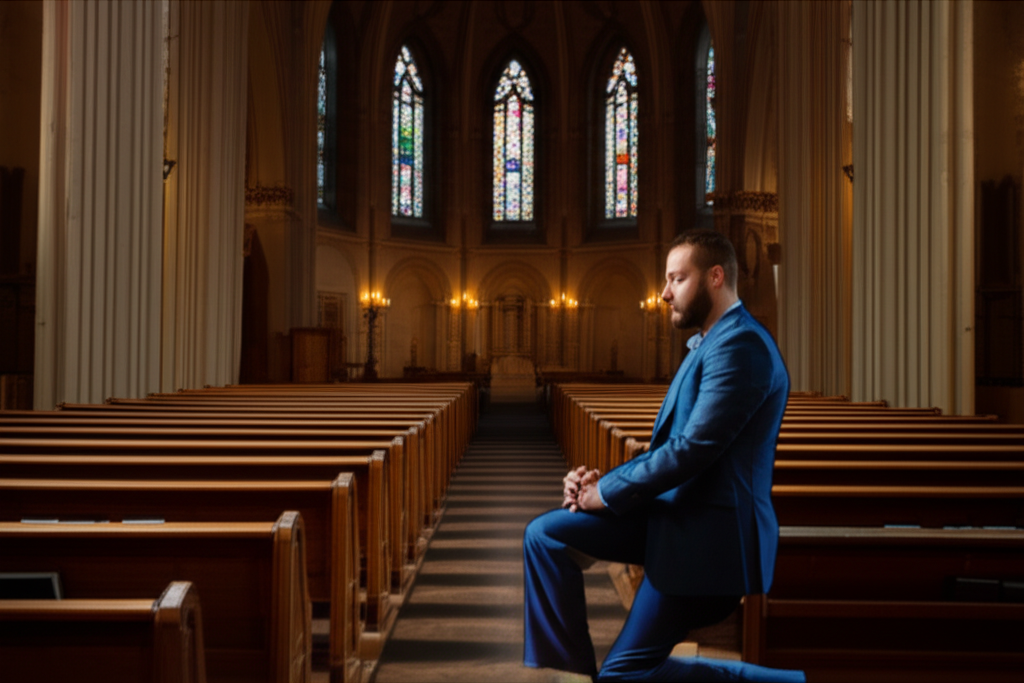
Picture this: a young man scrolls through his feed, bombarded by Andrew Tate’s bravado and Jordan Peterson’s calls to responsibility. He’s hungry for purpose, strength, something that makes him feel like a man in a world that seems to have forgotten what that means. Now imagine he walks into your average church on Sunday. What does he find? Coffee bars, emotional worship sets, and a sermon that feels more like a TED Talk than a battle cry.
Is it any wonder men are leaving the church in droves?

The Stats That Should Wake Us Up
Let’s start with the hard numbers. Male church attendance has plummeted to approximately 43% of congregations—the lowest in recorded history, according to Barna Research. That’s not a blip; it’s a crisis. Meanwhile, Pew Research shows that women outnumber men in U.S. congregations by a 60-40 split, and the gap is widening.
But here’s the kicker: while men drift away from the church, they’re flocking to the ‘manosphere’—online communities promising masculinity through dominance, wealth, and self-reliance. A 2025 study by the Institute for Family Studies found that 25% of young men aged 18-29 identify with manosphere ideologies, up from 15% just five years ago. And get this—some of them are finding their way to Jesus through it. Stories of conversions from Tate fans to Christ followers are popping up on Reddit and YouTube, like the viral thread in r/TrueChristian where a former atheist credited Peterson’s lectures for opening the door to the Gospel.
According to Pew Research, Gen Z men are the most religiously unaffiliated demographic in U.S. history, with 34% claiming no religion. Yet, house church movements among young adults have grown 300% since 2020, often led by men seeking authentic, rugged faith communities.
A Reformed Diagnosis: We’ve Feminized the Faith
As a Reformed theologian, I turn to Scripture and the confessions for answers. The Heidelberg Catechism reminds us that we are ‘prophet, priest, and king’ in Christ—roles that demand courage, leadership, and sacrifice. But somewhere along the way, the American church softened the edges. We traded the robust, world-conquering faith of the Reformers for a gentler, more ‘approachable’ version.
‘The church has become a place where men feel like intruders. We’ve emphasized emotion over duty, sensitivity over strength, and in doing so, we’ve lost half our army.’
DeYoung nails it. Think about the early church fathers. Augustine of Hippo wrestled with his own masculinity in Confessions, transforming from a hedonistic young man to a pillar of the faith. He didn’t find Christ in feel-good platitudes; he found Him in the stark truth of sin and grace.
Or consider the Scottish Reformation. John Knox thundered from the pulpit, calling men to lead their families and nation in godliness. His famous prayer—’Give me Scotland, or I die’—wasn’t a whisper; it was a warrior’s cry. These men embodied a masculinity rooted in Christ: strong, sacrificial, unyielding in truth.

Why the Manosphere Is Winning (And How the Church Can Respond)
The manosphere taps into real needs: purpose, brotherhood, challenge. Tate sells dominance; Peterson sells responsibility. But both miss the mark because they center on self, not Christ.
Enter the church—or at least, the church as it should be. Aaron Mamuyac and Scott Vander Ploeg on The Disciple Standard Podcast have been sounding this alarm. Scott, with his missionary background in Nigeria, knows what rugged faith looks like. ‘The church isn’t a spa,’ he says in a recent episode. ‘It’s a training ground for kingdom warriors.’
Their Multiply Method—Know Jesus, Make Jesus Known, Live a Jesus Life—offers a blueprint. It calls men to discipleship that’s active, relational, and multiplicative. Not sitting in rows, but locking arms in the fight.
‘The Son of God became a man to enable men to become sons of God.’
Lewis reminds us: true masculinity is Christlikeness—humble strength, sacrificial love, unwavering conviction.
Church History’s Wake-Up Call
Look to the Puritans for a model. In 17th-century England, men like John Owen led households in daily worship, catechizing their children and leading family prayers. This wasn’t soft; it was steel-tempered faith that withstood persecution and built generations of believers.
Fast-forward to today: in persecuted churches like Iran’s, men lead house churches at great personal risk, discipling new believers in secret. Open Doors reports these underground movements are 5x more effective at multiplication than Western models. Why? Because adversity forges men who lead.

Raising the Standard: Action Steps for Men and Churches
Brothers, the church needs you—not as spectators, but as leaders. Churches, stop catering to comfort and start challenging men to greatness. Here’s how:
- Start a Men’s Huddle: Gather 4-6 guys weekly. Open the Word. Confess sins. Pray boldly. No fluff.
- Embrace Biblical Masculinity: Study Ephesians 5 and 1 Timothy 3. Lead your home. Serve your church. Multiply disciples.
- Engage the Culture: Address manosphere lies head-on. Show how Christ offers true strength—not in dominating others, but in serving like He did.
- Mentor the Next Generation: Find a young man drifting toward toxic influences. Show him Christ’s way through relationship.
- Measure by Multiplication: Don’t count seats—count men equipped to lead and disciple.
The manosphere is winning because the church stopped speaking to men like men. It’s time to reclaim biblical masculinity—not as macho posturing, but as Christ-centered strength. The kingdom needs warriors. Will you answer the call?
For more on biblical manhood and discipleship, tune into The Disciple Standard Podcast with Aaron Mamuyac and Scott Vander Ploeg on YouTube @thedisciplestandard, Spotify, or Apple Podcasts. Visit disciplestandard.com to raise the standard in your life.